There’s a moment in midlife when food starts to feel different. The meals that used to fuel you don’t quite land the same way. You catch yourself reading labels you used to skip. You’re paying attention now, because your body is asking you to.
Here’s the good news: it’s listening back.
As estrogen quietly recedes through perimenopause and menopause, what you put on your plate becomes one of the most powerful, accessible tools you have. Hot flashes, restless nights, mood waves, the slow metabolic shift - food won’t fix everything, but it can move the needle on all of it. This is your guide to the estrogen-rich foods for menopause that work with your changing body, and how to fold them into a daily rhythm that feels nourishing rather than restrictive.
Phytoestrogens: Your Body’s Quiet Allies
Phytoestrogens are plant compounds with a gentle, estrogen-like influence in the body. They aren’t a replacement for your own estrogen, and your body knows the difference. But they can interact with estrogen receptors in ways that ease symptoms and support balance during a season when your hormones are recalibrating.
Most estrogen-rich foods for menopause contain two main families of phytoestrogens: isoflavones (concentrated in soy and legumes) and lignans (abundant in flaxseeds and whole grains). Both come bundled with fiber, antioxidants, and minerals that nourish the rest of your changing body too.
The Foods Worth Building Your Week Around
-
Flaxseeds
Among the richest dietary sources of lignans, flaxseeds also bring omega-3s and fiber to support heart health, steady digestion, and the kind of even-keel energy your nervous system is craving right now. They’re the easiest place to start.
Daily ritual: Grind them fresh (they oxidize quickly once cracked) and stir a tablespoon into oatmeal, a smoothie, or your morning yogurt. -
Soy and Soy Foods
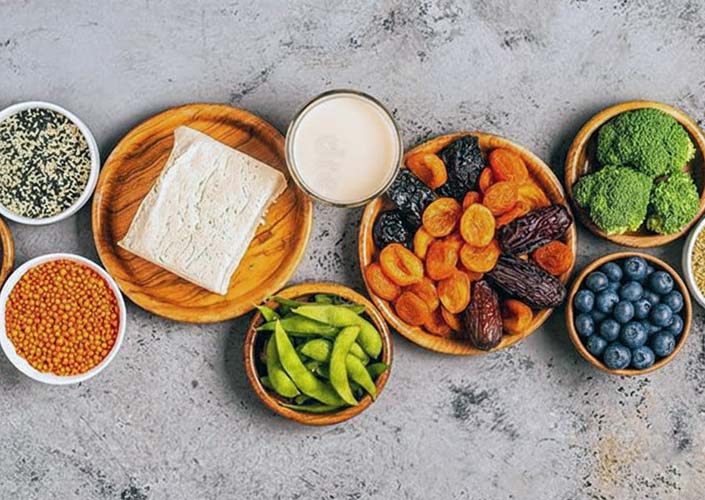
Soybeans, tofu, tempeh, and edamame contain isoflavones, the most studied phytoestrogens for hot flash relief and bone support. Whole soy foods carry more nuance and nutrition than the processed versions sitting on convenience-store shelves.
Daily ritual: Aim for a few servings each week in real, recognizable forms. If your diet leans soy-light, Thrive GRACE offers concentrated soy isoflavones in supplement form to fill the gap. -
Chickpeas and Lentils
Legumes deliver phytoestrogens alongside protein and fiber, the trio that keeps blood sugar steady and your gut microbiome thriving. And your gut microbiome influences your hormones more than most women have ever been told.
Daily ritual: Add chickpeas to grain bowls and salads. A simple lentil soup on a Sunday feeds you for days. -
Sesame Seeds
Tiny, mighty, and beautifully versatile. Sesame seeds are lignan-rich and add a toasted, nutty depth to almost anything you put them on.
Daily ritual: Toast them lightly and scatter over roasted vegetables, grain bowls, or salads. -
Dried Fruits
Apricots, dates, and prunes carry phytoestrogens along with antioxidants and minerals. They’re naturally concentrated, so a small handful goes far.
Daily ritual: Pair a few with a small handful of nuts for an afternoon snack that satisfies without spiking and crashing your energy. -
Whole Grains
Oats, barley, brown rice, and whole wheat offer fiber, micronutrients, and modest amounts of phytoestrogens. Swapping refined grains for whole grains is one of the simplest changes with the longest-tail payoff.
Daily ritual: Choose one meal a day to anchor with a whole grain. Oats for breakfast is the easiest place to begin. -
Cruciferous Vegetables
Broccoli, cauliflower, Brussels sprouts, and kale don’t just contain phytoestrogens. They contain compounds that help your liver metabolize estrogen in healthier ways. They’re working for you on two fronts.
Daily ritual: Roast a sheet pan of cruciferous vegetables at the start of the week and pull from it for three or four meals. -
Berries
Strawberries, blueberries, raspberries, blackberries. Antioxidants, gut-friendly fiber, and small amounts of phytoestrogens in a form your taste buds genuinely want to eat.
Daily ritual: A handful with your morning oats. A bowl after dinner instead of dessert.
How to Weave These Foods Into Your Days
None of this is about overhauling your kitchen. The women who thrive through menopause make small, repeated choices that compound over months:
- Start your morning with oats topped with ground flaxseed and berries.
- Swap refined grains for whole grains at lunch and dinner.
- Replace some animal protein with tofu or tempeh a few times a week.
- Add legumes to salads, soups, or grain bowls several times weekly.
- Snack on a small portion of dried fruit with a handful of nuts.
These aren’t rules. They’re rhythms.
Food Is Foundational, But It Isn’t the Whole Picture
What you eat matters enormously, and it works best alongside the practices that steady the rest of you. Hydration. Real sleep. Daily movement that feels good rather than punishing. Stress regulation through breathwork, time outdoors, or quiet pauses built into your day.
If you’d like targeted support beyond your plate, Thrive GRACE is formulated to complement a phytoestrogen-rich diet with concentrated soy isoflavones and black cohosh that support the body through midlife hormonal change.
A Note on Caution
For most women, the phytoestrogen levels in food are gentle, well-tolerated, and beneficial. If you have a history of estrogen-sensitive conditions (certain hormone-driven cancers, severe endometriosis), or you’re currently on prescription hormone therapy, have a conversation with your healthcare provider before significantly increasing your phytoestrogen intake. The goal is always to work with your body and your doctor in partnership.
The Bigger Picture
You don’t need to perfect your diet to feel better. You need to nudge it, gently and consistently, in the direction of foods that meet your body where it is right now. Small, repeated choices, with whole foods at the center, are how comfort and steadiness return.
The women who thrive in midlife don’t follow a rigid meal plan. They build a relationship with food that honors the body they’re in - the one that’s evolving, the one that’s asking for new kinds of care.
Frequently Asked Questions
Do estrogen-rich foods really work?
For many women, yes, especially when phytoestrogen-rich foods become a consistent part of daily life rather than an occasional addition. The effect is mild and cumulative rather than dramatic, and it tends to show up most clearly in hot flash frequency, mood stability, and long-term bone support.
How long does it take to see results?
Subtle shifts can show up within a few weeks. More consistent, noticeable benefits typically take one to three months of daily inclusion. Bodies respond on their own timelines.
Can I eat estrogen-rich foods every day?
Yes. Moderate daily intake across a variety of sources (flaxseeds, soy, legumes, whole grains, cruciferous vegetables, berries) is safe and supportive for most women in this season of life.
Are supplements better than food?
Food should be your foundation, always. Whole foods deliver phytoestrogens alongside fiber, vitamins, minerals, and antioxidants that work together in ways isolated supplements can’t fully replicate. Targeted supplementation can complement a strong food foundation when your healthcare provider agrees it’s a good fit.
Are there risks to eating lots of phytoestrogens?
For most people, food-level phytoestrogens are gentle and safe. If you have an estrogen-sensitive medical condition, or you’re on prescription hormone therapy, talk with your clinician before making significant dietary changes.
Your Body Knows What It Needs. You’re Just Helping It Get There.
Eating well through menopause isn’t about restriction or rigidity. It’s about partnership: feeding the body you have today the things that help it feel like itself. You don’t need to do all of this perfectly. You just need to do some of it, most days, with a little intention.
This is what coming home to yourself in midlife looks like, one meal at a time.
Shop the LiveLoveTHRIVE Collection
Live vibrantly. Love your body. THRIVE through midlife.


