
Many women notice that digestion gets noticeably worse during perimenopause and menopause. Bloating that wasn’t there before. Constipation. Indigestion after meals that used to be fine. Gas and bowel patterns that suddenly feel unpredictable. None of this is in your head, and none of it is random.
Digestive changes in midlife are closely tied to declining estrogen and progesterone, which directly affect gut motility, stomach acid production, the gut microbiome, and how efficiently your body absorbs nutrients. Understanding the connection between hormones and digestion is the first step to actually fixing what’s going on, instead of treating each symptom as if it appeared from nowhere.
How Menopause Affects Digestion
Hormones don’t just affect periods and mood. They affect the entire digestive system, which is why digestion can shift dramatically in midlife even when nothing else has changed. Here’s what’s actually happening:
Estrogen helps regulate gut motility - the speed food moves through your digestive tract. When estrogen declines, gut motility often slows. Slower transit means food sits longer in the colon, where bacteria have more time to ferment it. That fermentation produces gas. The slower transit also means more water gets reabsorbed from stool, which leads to constipation.
Progesterone is a smooth muscle relaxant. In perimenopause, progesterone fluctuates wildly, which contributes to the unpredictable bowel behavior many women describe in this stage - constipation one week, urgency the next, never quite the same pattern twice.
Stomach acid production tends to decrease with age, sometimes significantly. Less stomach acid means less efficient protein digestion, poorer absorption of B12 and iron, and less natural defense against bacteria that shouldn’t be in the gut.
The gut microbiome itself shifts during the menopause transition. Diversity often decreases, inflammation rises, and the bacteria that help metabolize estrogen (called the estrobolome) become less efficient at their job.
Cortisol from chronic stress amplifies all of this. The vagus nerve connects your brain directly to your gut. When you’re under sustained stress, gut function changes - faster or slower, sometimes both unpredictably.
This is why menopause digestion often feels nothing like the digestion you had at 30.
Common Menopause and Digestive Issues
Many women experience digestive symptoms for the first time during perimenopause and menopause. Others notice that issues they used to manage easily suddenly become much harder. Common menopause and digestive issues include:
- Bloating and abdominal pressure, often worse in the afternoon and evening
- Constipation or irregular bowel movements
- Diarrhea or alternating bowel patterns
- Increased gas, sometimes with new food sensitivities
- Acid reflux and heartburn, especially after eating
- Menopause and indigestion after meals that used to be unproblematic
- A sense that food just sits in the stomach
These symptoms tend to fluctuate. They get worse during stress, after poor sleep, during the more intense hormonal swings of perimenopause, and with dietary changes.
The Link Between Gut Health and Menopause
Gut health and menopause are connected through the microbiome - the trillions of bacteria living in your digestive tract. These bacteria help regulate inflammation, train your immune system, support metabolism, and metabolize hormones.
The estrobolome is a specific subset of gut bacteria that processes estrogen. When the gut microbiome is balanced, the estrobolome efficiently helps your body manage and recycle estrogen. When the microbiome is disrupted - by stress, antibiotics, poor diet, or the natural shifts of midlife - estrogen metabolism becomes less efficient. This may worsen menopause symptoms and contribute to ongoing digestive discomfort.
Supporting gut health in midlife isn’t only about digestion. It influences inflammation, immune function, mood, metabolic health, and how well your body adapts to declining estrogen overall.
Menopause and Indigestion: Why It Happens
Indigestion - that uncomfortable feeling of fullness, bloating, or burning after eating - is one of the most common menopause and digestive issues. Several mechanisms drive it.
Stomach acid production decreases with age, and this is often misread. The conventional assumption is that reflux means too much acid. But low stomach acid can cause the same symptoms: food sits in the stomach longer because there isn’t enough acid to break it down, pressure builds, and what does come back up still burns because acid still exists, just not enough to do its job efficiently.
Slower gut motility (driven by lower estrogen) compounds the pressure and the feeling of heaviness after meals. Stress and poor sleep, both common in midlife, further disrupt digestive function. The gut and the nervous system are tightly linked: when your nervous system is stuck in fight-or-flight, digestion gets deprioritized.
How to Support Menopause Digestion Naturally
The interventions that actually work aren’t glamorous. They’re also not interchangeable with the generic “gut health” advice that gets recycled across every wellness site. What helps most for menopause digestion specifically:
Focus on Fiber-Rich Foods
Fiber feeds the beneficial bacteria in your gut and supports regular bowel movements. Aim for a mix of soluble fiber (oats, apples, beans, chia) and insoluble fiber (vegetables, whole grains, nuts). Most women in midlife are getting nowhere near the 25 to 30g per day that’s actually useful. Increase gradually to avoid temporary gas, and pair fiber increases with adequate water.
Prioritize Protein and Healthy Fats
Protein at every meal keeps blood sugar steady and supports muscle mass, both of which matter more in midlife than they used to. Healthy fats from olive oil, avocados, nuts, seeds, and fatty fish support hormone production and reduce inflammation. They also help you feel full, which reduces the digestive strain of constant low-grade snacking.
Stay Hydrated
Hydration is essential for digestion, especially if constipation is a concern. Water keeps stool soft enough to move through. Most women need more than they’re drinking. Aim for roughly half your body weight in ounces as a starting point, and adjust up if you’re exercising or in heat.
Support the Gut Microbiome
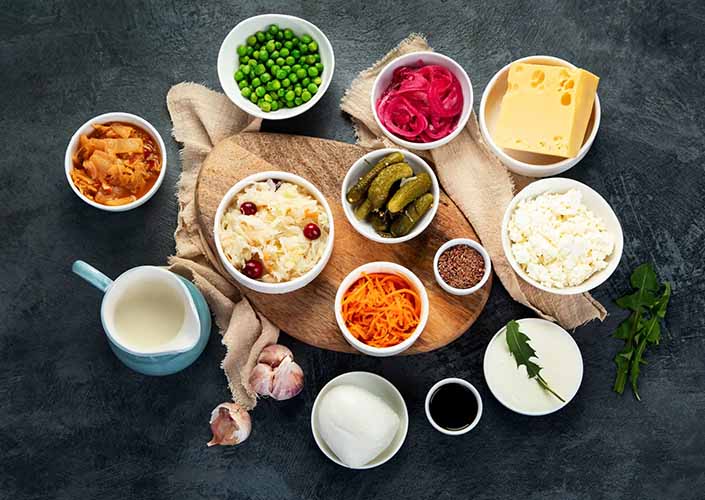
Supporting the gut microbiome directly is one of the most useful things you can do for menopause digestion. Fermented foods - yogurt with live cultures, kefir, sauerkraut, kimchi - add beneficial bacteria and the metabolites they produce.
A targeted probiotic can add specific strains the body needs more support with in midlife. Thrive FORTIFY is formulated with four clinically studied strains - Lactobacillus acidophilus La-14, Bifidobacterium lactis Bl-04, Lactobacillus plantarum Lp-115, and Lactobacillus paracasei Lpc-37 - chosen for digestive, immune, and urogenital support in midlife women. The 40 billion CFU is guaranteed through expiration (not just at manufacture, which is the industry trick most brands use), and the MAKTREK Bi-Pass delivery system protects the bacteria through stomach acid so they actually reach the intestine alive.
Manage Stress and Sleep
Stress and sleep have a direct line to your gut. The vagus nerve connects your brain and digestive system, and when your nervous system is dysregulated, digestion suffers. Chronic stress also raises cortisol, which increases gut permeability and disrupts the microbiome.
Daily nervous system care matters more in midlife than at any earlier stage. Breathwork, time outside, gentle movement, real human connection, and consistent sleep all help. Targeted support can be useful where lifestyle alone isn’t enough: Thrive CALM is formulated with adaptogens to support the stress response without sedating you, and Thrive DREAM supports sleep quality, which directly affects digestion the next day.
When to Pay Attention to Ongoing Digestive Symptoms
Most menopause-related digestive symptoms improve with the right inputs. But persistent or severe symptoms shouldn’t be ignored. Talk to a healthcare provider if you experience:
- Ongoing or severe abdominal pain
- Unexplained weight loss
- Blood in stool
- Dramatic changes in bowel habits that don’t resolve
- Difficulty swallowing
- Persistent vomiting
Menopause changes digestion, but it doesn’t excuse symptoms that warrant a real workup. Trust your body. If something feels meaningfully wrong, get it checked, and don’t let it get waved off as “just menopause.”
Supporting Your Body Through Menopause
Menopause digestion is a real, mechanistically explainable shift in how your body processes food. It’s not aging poorly, it’s not in your head, and it’s not something you have to live with quietly.
The interventions that work aren’t glamorous. Fiber, protein, water, sleep, stress management, and targeted support for the gut microbiome. The wellness industry will keep trying to sell you the next miracle gut powder. The actual solution is more boring and more durable: feed your microbiome, support your nervous system, and choose supplements that name their strains and deliver what they claim.
Your digestion can absolutely improve from where it is. The body adapts when you give it what it needs.


